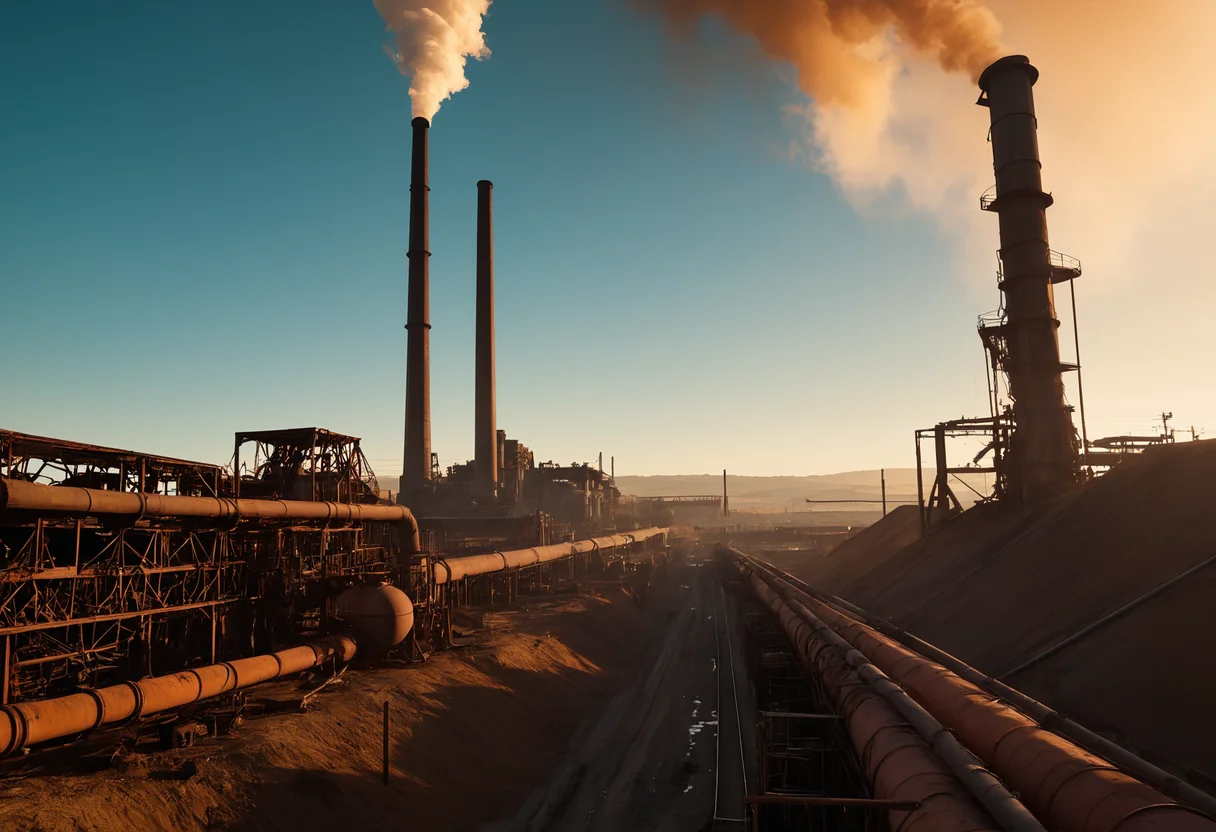
Climate and Economic Growth: The Dilemma of Fossil Fuels
Economic growth fueled by fossil fuels has improved living conditions for much of the population, but at a high cost. Extreme weather events and rising sea levels are just some of the consequences of an unsustainable energy model.
Quick Answer
Fossil fuels have powered economic growth, but with high environmental and social costs. Countries like Sweden demonstrate that it is possible to decouple economic development and CO2 emissions, leveraging clean energy sources and advanced technologies.
The Swedish Model: Scissors Open Between Growth and Emissions
In 2013, a metaphor of "open scissors" illustrated the possibility of separating GDP growth from carbon emissions. Sweden represented a case study: since 1996, its emissions have decreased by a third compared to the recent peak and by more than half compared to the 1970 maximums, while GDP has more than doubled.
Energy Efficiency and Renewable Sources
Sweden has leveraged its abundance of hydroelectric energy and a solid base of nuclear reactors to reduce emissions. However, this model is not easily replicable in countries with more diversified economies and fewer hydroelectric resources, such as the United States.
The Challenges of the Energy Transition
The transition to a low-emission economy requires significant investments in clean technologies and sustainable infrastructure. Sustainability policies must be integrated with economic growth strategies to ensure that environmental progress does not compromise social well-being.
The Need for Global Policies
To address the climate crisis, it is essential to adopt global policies that promote the adoption of green technologies and reduce dependence on fossil fuels. This requires international collaboration and long-term commitment to achieve decarbonization goals.
The Future of Energy: Innovation and Sustainability
Emerging technologies, such as solar and wind energy, green hydrogen, and smart grids, offer promising solutions for a low-emission future. Investing in these technologies can create new economic opportunities and reduce environmental impact.
The Importance of Training and Education
Training and education are fundamental to promoting awareness and the skills needed for a successful energy transition. Educational programs and awareness initiatives can encourage the adoption of sustainable practices and technological innovation.
The Challenge of Climate Justice
The transition to a green economy must be fair and inclusive, ensuring that benefits and burdens are distributed equitably. Sustainability policies must take into account social and economic disparities to prevent the most vulnerable communities from being left behind.
The Role of National and International Policies
The energy transition requires coordination between national policies and international agreements. For example, the European Union has set the goal of reducing greenhouse gas emissions by 55% by 2030 compared to 1990 levels, as provided by the European Green Deal. This commitment translates into stringent regulations and financial incentives to promote the adoption of clean technologies. In the United States, the Inflation Reduction Act of 2022 has allocated over $369 billion to support clean energy and industrial decarbonization.
The Economic Impact of Energy Transitions
Energy transitions can have significant effects on the real economy. According to an IEA study, investments in renewable energies could create millions of jobs by 2030. However, traditional sectors such as coal and oil could suffer job losses, requiring professional retraining programs and support for local communities. Companies that do not adapt to new sustainability standards may face high financial risks, including rising costs for carbon emissions and loss of access to international markets.
The Importance of Sustainable Finance
Sustainable finance plays a crucial role in supporting the energy transition. Investments in green bonds, impact funds, and structured finance projects can mobilize private capital to support clean infrastructure and innovative technologies. Financial institutions are adopting ESG (Environmental, Social, and Governance) criteria to assess risks and opportunities related to sustainability. This approach not only reduces exposure to climate risks but also opens new investment opportunities in sectors such as renewable energy and energy efficiency.
Climate Resilience and Adaptation
In addition to mitigation, climate resilience is fundamental to addressing the inevitable impacts of climate change. Coastal cities must invest in infrastructure to protect against sea level rise, while agricultural regions will need to adopt sustainable management practices to address changes in precipitation patterns. Monitoring and forecasting technologies, such as earth observation systems and advanced climate models, can provide crucial data for planning and adaptation.
The Role of Digital Technologies
Digital technologies such as the Internet of Things (IoT), artificial intelligence, and big data can optimize energy resource use and improve operational efficiency. Smart grids, for example, allow real-time energy demand management, reducing waste and integrating renewable sources. AI can analyze large amounts of data to identify energy consumption patterns and suggest customized solutions for emission reduction. Digital platforms also facilitate collaboration among stakeholders, accelerating innovation and the spread of sustainable practices.
Opportunities for Businesses
Companies that adopt sustainability strategies can gain significant competitive advantages. ISO 27001 certification and other cybersecurity regulations can improve corporate reputation and attract investments. Companies investing in green technologies can access tax incentives and public contributions, reducing operating costs and improving energy efficiency. Furthermore, sustainability is increasingly a criterion for consumer choice, who prefer products and services from companies with a reduced ecological footprint.
The Challenge of Climate Justice
The Future of Energy Policies
The future of energy policies will depend on the ability to integrate technological innovation, environmental sustainability, and economic development. Policies must be flexible and adaptable to respond to changes in the global context. International collaboration is essential to share knowledge and resources, accelerating the transition to a low-emission economy. Emerging technologies, such as solar and wind energy, green hydrogen, and smart grids, offer promising solutions for a sustainable future. Investing in these technologies can create new economic opportunities and reduce environmental impact.
The Importance of Training and Education
Editorial Note and Disclaimer
The guides and content published on GoYou are the result of independent research and analysis activities, for informational, educational, and in-depth purposes.
GoYou does not constitute a journalistic publication or an editorial product pursuant to Law No. 62/2001 and does not engage in real-time information activities.
The GoYou project does not provide professional, technical, legal, or financial advice and disclaims all responsibility for the improper use of the information published.
In the Crypto sector, every investment involves risks: the reader is invited to always inform themselves autonomously before making any decision.